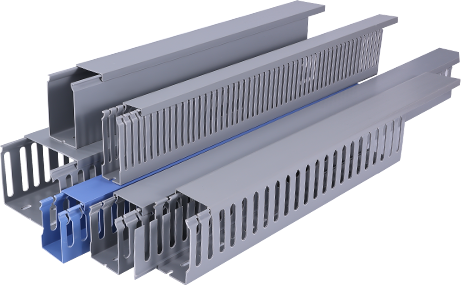

In the intricate web of modern infrastructure, there exists a crucial yet often overlooked component that ensures the seamless flow of information and power throughout our buildings. Cable trunking, also known as cable ducting or cable management systems, serves as the backbone of organized and efficient wiring solutions. This essential infrastructure element provides a structured pathway for electrical cables, data lines, and communication wires, offering protection, organization, and accessibility in residential, commercial, and industrial settings.
The primary purpose of cable trunking is to safeguard cables from physical damage, environmental factors, and unauthorized access. Constructed from durable materials such as PVC, metal, or fiberglass, these systems create a protective enclosure that shields wires from moisture, dust, chemicals, and mechanical stress. In industrial environments, where machinery and heavy equipment pose constant risks, metal trunking offers enhanced durability and fire resistance, ensuring the continuity of operations even in challenging conditions. For residential and commercial spaces, PVC trunking provides a cost-effective and lightweight solution that can be easily installed and customized to fit specific layout requirements.
Beyond protection, cable trunking plays a vital role in maintaining order and organization within complex wiring networks. In today's technology-driven world, buildings are equipped with an ever-increasing number of electrical and data cables, each serving a distinct purpose. Without proper management, these cables can quickly become tangled, leading to inefficiencies, maintenance difficulties, and safety hazards. Cable trunking systems feature compartments, dividers, and removable lids that allow for the systematic separation of different cable types. This organization not only simplifies installation and maintenance but also reduces the risk of signal interference between power and data lines, ensuring optimal performance of electrical and communication systems.
The versatility of cable trunking is another key advantage that makes it suitable for a wide range of applications. Available in various sizes, shapes, and configurations, these systems can be adapted to meet the unique needs of different environments. For example, surface-mounted trunking is ideal for retrofitting existing structures where concealed wiring is impractical, while flush-mounted trunking offers a sleek, aesthetically pleasing solution for new construction projects. Additionally, modular trunking systems allow for easy expansion and modification, accommodating future upgrades and changes in technology without the need for extensive rewiring.
In terms of safety, cable trunking significantly reduces the risk of electrical fires and accidents. By containing cables within a closed system, these structures prevent exposed wires from coming into contact with flammable materials or human touch, minimizing the potential for short circuits and electrical shocks. Furthermore, trunking systems are designed to meet strict safety standards, with features such as fire-resistant materials and flame-retardant properties that help contain fires and slow their spread in the event of an emergency. This commitment to safety makes cable trunking an essential component in compliance with building codes and regulations worldwide.
The installation and maintenance of cable trunking systems are relatively straightforward, making them accessible to both professional electricians and DIY enthusiasts. Most trunking systems come with pre-drilled holes, snap-on connectors, and user-friendly instructions that simplify the installation process. Removable lids and hinged access panels allow for easy inspection and maintenance, enabling technicians to quickly identify and resolve issues without disrupting the entire wiring network. This accessibility not only saves time and labor costs but also ensures that systems can be updated or repaired efficiently as technology evolves.
In conclusion, cable trunking is an indispensable element of modern infrastructure that combines protection, organization, versatility, and safety into a single, efficient solution. As our reliance on technology continues to grow, the demand for reliable and adaptable cable management systems will only increase. Whether in a bustling office building, a state-of-the-art data center, or a cozy home, cable trunking默默地 ensures that our electrical and communication networks operate smoothly, securely, and efficiently. By recognizing the importance of this unsung hero, we can appreciate the role it plays in supporting the connectivity and functionality of the world around us.